 |
| https://blog.synology.com/wp-content/uploads/2019/02/03-01.jpg |
As the focus of this discussion, the Information Security
Edition of the 2021 EDUCAUSE Horizon Report was selected.
As more content becomes digital only ranging from documents,
images, or entire organizations which exist without a physical building, the
integrity of this digitized content increases in importance. One of the key
areas identified within the report was on preserving data authenticity and data
integrity (EDUCAUSE, 2021). The attacks on integrity come from many vectors
including malicious personnel, well-meaning personnel, bug-riddled
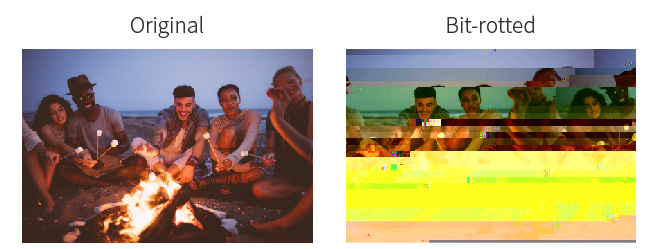
applications, or even bit-rot (2021). Organizations are going to need to put
more effort and focus into protecting the integrity of the data which forms the
basis of their operations, profitability, or even evidence of compliance in
areas such as government regulations.
Companies will need to adopt or implement technologies which
actively work against passive or unintentional means of integrity loss. These
methods would include backups, monitoring storage media health and enforcing a
hardware lifecycle management strategy for storage media and devices.
Organizations will also need to put in active integrity protections and
alerting. Tools such as auditing, read-only access privileges for those who do
not need to modify data, and strong access controls will all help to protect
data.
Additionally,
technologies must be developed or streamlined which aid personnel in understanding
if the data they are accessing has its integrity intact or if it has been compromised.
Current approaches such as expecting individuals to compute and compare a
hashing-sum to a published number is not realistic. Furthermore, older approaches
such as utilizing MD5 have already been proven to be vulnerable to attack and two
different PDF documents can return the same hash which results in integrity
being lost. Perhaps blockchains or other non-reputable information sources can
be leveraged as a way to automatically check and associate files with recorded
hashes whenever the content is accessed. As awareness of the consequences of
data integrity begins to increase among non-technical personnel and the public,
demand will spur innovation and provide a much more accessible means to receiving
for viewing assurance that the data being accessed is legitimate.
References
Butcher,
M. (2021). Backed by Vint Cerf, Emortal wants to protect your digital legacy
from ‘bit-rot’.
2021 EDUCAUSE horizon report® | Information
security edition. (n.d.). Library | EDUCAUSE. https://library.educause.edu/resources/2021/2/2021-educause-horizon-report-information-security-edition
Gauravaram,
P., Kelsey, J., Knudsen, L. R., & Thomsen, S. (2010). On hash functions
using checksums. International Journal of Information Security, 9(2), 137-151. http://dx.doi.org/10.1007/s10207-009-0100-7


No comments:
Post a Comment